USTC Astronomy Colloquium Series: 2025 Fall
AI + Astronomy: The Development and Application of a New Paradigm
贾鹏 教授
太原理工大学
2025/12/2, 4:00pm , the 19th-floor Observatory Hall
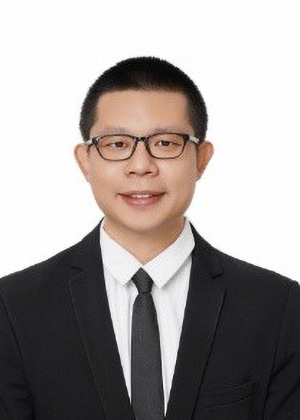
报告人:
Peng Jia is a professor in the College of Physics and Optoelectronics, Taiyuan University of Technology since 2018. In 2013, he obtained Ph.D. in Adaptive Optics at Nanjing University. He studied Adaptive Optics System and Data Processing Method for Large and Small Telescopes in the Center for Adavanced Instrumentation, Durham University, between 2016 and 2018. Peng Jia's main interests are Smart Astronomical Instruments and Data Processing Methods, which include optical design and simulation, machine learning and artificial intelligence. Peng Jia is the Head of the SMART OPTICS Group and also Head of the Institute of Astronomy and Space Sciences in Taiyuan University of Technology.摘要:
In recent years, Artificial Intelligence (AI) has been widely applied in astronomical research. A variety of work, characterized by terms such as "large models," "deep learning," and "data-driven" approaches, frequently appears in academic journals and news reports. However, as various AI algorithms are applied to different fields of astronomy, issues such as over-reliance on datasets, unstable results, and poor interpretability have caused astronomical technicians and scientists to gradually raise doubts: Is AI suitable for astronomical research? What are the main obstacles to its practical implementation in astronomy? Considering the development of AI in various sectors and the characteristics of the astronomical discipline, what are the future development directions? This report will draw upon the project team's recent experience in practice and application, combined with several end-to-end AI application cases established by the team, to demonstrate the prospects and development strategies for "AI + Astronomy." 邮编:230026 ,
  联系电话: 0551-63601861
 Email: