USTC Astronomy Seminar Series: 2025 Fall
CRISM: How Cosmic-Ray Feedback and Chemistry-Driven Thermal Instability Reshape Interstellar Turbulence?
袁嘉豪 助理教授
南京大学
2025/12/22, 4:00pm , the 19th-floor Observatory Hall
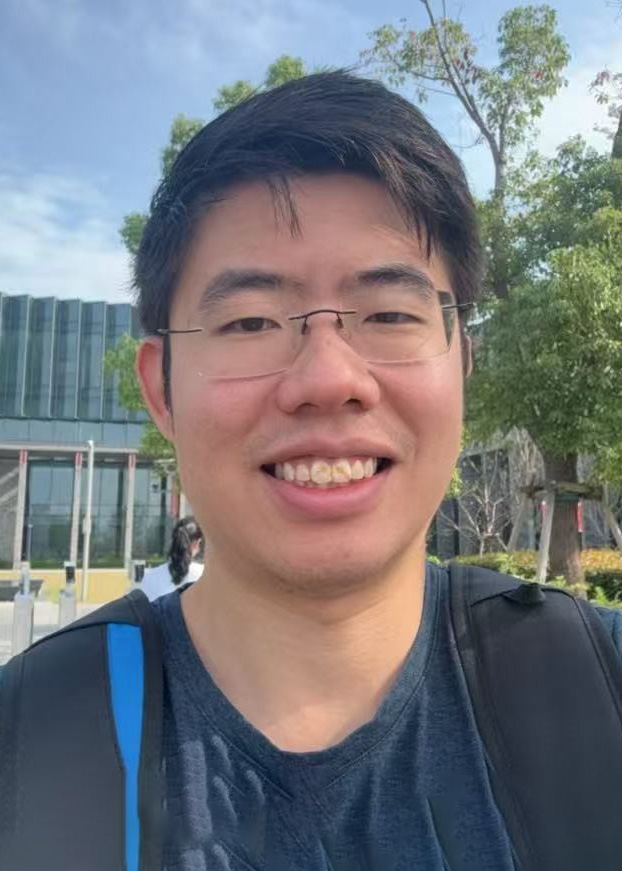
报告人:
袁嘉豪,现任南京大学深空探测科学与技术研究院助理教授。2014年毕业于香港中文大学物理系,2022年在美国威斯康星大学麦迪逊分校天文系获得博士学位。2022年至2025年在美国洛斯阿拉莫斯国家实验室担任奥本海默杰出博士后学者,并于2025年10月加入南京大学。主要研究方向包括空间与天体物理湍流理论、星际介质相变、恒星形成与宇宙射线加速等计算天体物理问题,以及宇宙学前景建模。截至2025年10月,在国际主流天文与物理期刊(如 Nature、Nature Astronomy、MNRAS、ApJ、PRD)发表论文30余篇,被引用超过1200次。过去三年共获得超过155万GPU计算节点小时和125万CPU计算节点小时的计算资源。曾獲2022-2025 NERSC Award, 2023-2025 LANL M&S Award, 2025 LANL SPOT Award, 2025 年DOE INCITE Award等。担任 ApJ、ApJ Letters、MNRAS、Frontiers in Astronomy 等国际知名天文期刊审稿人。2023年曾担任美国NASA ATP ISM/SF Panel基金评审主席,并多次受邀担任美国DOE Fusion Science、LANL ER & IC、加拿大NSERC等基金项目评委。摘要:
Polarized galactic dust and synchrotron emissions are among the brightest signals in the sky, encoding the interplay between turbulence, magnetic fields, chemical evolution, and cosmic rays in the interstellar medium (ISM). Traditional models link small-scale polarization fluctuations to magnetized turbulence driven by supernova feedback and large-scale galactic motions, but recent work shows that cosmic-ray feedback and chemistry-driven thermal instabilities also reshape turbulence at sub-parsec scales. In this talk, I will present the Cosmic Ray–Interstellar Medium (CRISM) Model, which proposes that radiative cooling—primarily through CO and CN molecular lines—triggers thermal instability that converts Alfvénic modes into compressive modes at ∼1 pc scales. These compressive modes enable first-order Fermi acceleration of cosmic rays in the 10⁴–10⁵ GeV range, potentially explaining spectral features reported by LHAASO and GRAPES-3. Our large-scale simulations (8192³ grid; 1.3 million GPU node-hours on ORNL Frontier) reproduce the “incompressible-like” polarization foregrounds seen by Planck, showing that cosmic-ray coupling and chemical cooling form a self-regulating feedback loop that damps compressive turbulence, sustains solenoidal motions, and imprints observable signatures on dust and synchrotron polarization, with implications for cosmic-ray transport, star formation, and primordial B-mode constraints in next-generation CMB experiments. 邮编:230026 ,
  联系电话: 0551-63601861
 Email: