USTC Astronomy Seminar Series: 2026 Spring
Unveiling the High-redshift Obscured AGN Population with JWST/MIRI
吕建伟 助理教授
亚利桑那大学
2026/03/10, 2:30pm , the 19th-floor Observatory Hall
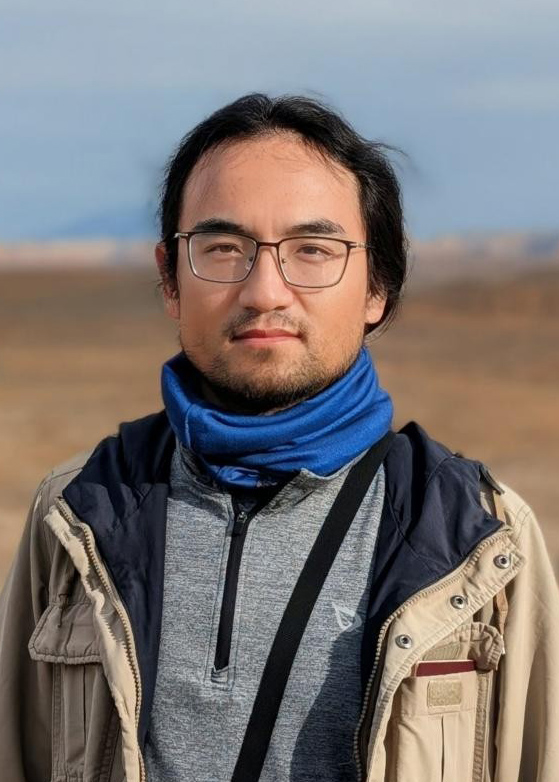
报告人:
Dr. Jianwei Lyu is an assistant research professor at Steward Observatory, University of Arizona, and a member of the JWST MIRI/NIRCam Science Team. His research focuses on supermassive black holes (SMBHs) and galaxies across cosmic time, with particular emphasis on their infrared properties. He develops and applies multi-wavelength techniques to identify and characterize active galactic nuclei (AGN), especially those obscured by dust, leveraging data from deep X-ray, optical, infrared, and radio surveys. His work spans spectral energy distribution (SED) analysis, time-domain variability studies, dust reverberation mapping, morphological imaging, and integral field spectroscopic observations, complemented by numerical simulations to interpret complex datasets. He got his PhD in astronomy & astrophysics from University of Arizona in 2020.摘要:
The James Webb Space Telescope (JWST) has revealed a substantial population of active galactic nuclei (AGN) in the early Universe, including broad-line sources associated with little red dots (LRDs) and narrow-line AGN candidates identified via rest-frame UV high-ionization lines. However, AGN selection based primarily on NIRCam colors and NIRSpec or NIRCam/WFSS spectroscopy remains subject to biases against dust-obscured systems, limiting a complete census of black hole growth at high redshift. By leveraging deep MIRI imaging in the GOODS-S field, we identify a significant population of dusty AGN from cosmic noon to cosmic dawn through their characteristic hot dust emission. I will present the selection strategy, discuss their multi-band and host-galaxy properties, and compare this population to LRDs and other JWST-identified AGN. These results provide a more complete view of obscured accretion and highlight the essential role of mid-infrared observations in constructing an unbiased AGN census in the early Universe. 邮编:230026 ,
  联系电话: 0551-63601861
 Email: