USTC Astronomy Seminar Series: 2026 Spring
Simulating Accretion and Early Light Curve in Tidal Disruption Event
黄小珊 博士
加州理工学院
2026/03/16, 10:00am , 物质科研楼C1001会议室
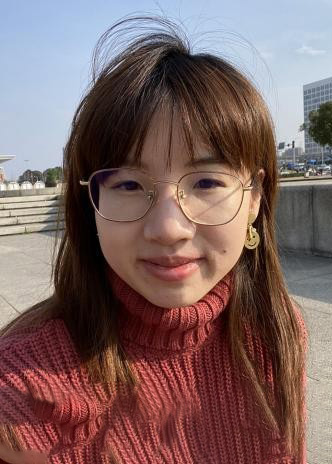
报告人:
Dr. Xiaoshan Huang obtained her doctoral degree from the University of Virginia in 2023 and has since been at Caltech as a Burke Fellow. Her research focuses on hydrodynamic simulations incorporating radiative transfer processes. She is broadly interested in understanding transient phenomena driven by accretion and shocks.摘要:
The tidal disruption of a star by a supermassive black hole and consequent accretion can lead to a transient electromagnetic flare in multiple bands. However, the origin of the detected emission from such tidal disruption events (TDEs) remains an open question. In this talk, I will discuss the potential emission mechanisms in TDEs during accretion disk formation, implied by series of 3D radiation-hydrodynamic simulations. We find that circularization of stellar debris is not prompt. A more circularized accretion flow only forms after about one month following the initial energy dissipation, lagging behind the fallback rate peak. The circularization shocks are an important emission source rather than accretion itself. Photons produced by shocks in the inner accretion flow are reprocessed by an optically thick layer formed during circularization. The photosphere is asymmetric, leading to angular-dependent light curves. By varying the viewing angle, we can reproduce optical events that are either X-ray bright or X-ray dim. We also construct broad band broadband spectral energy distribution (SED) from simulations. At multiple epochs, the SED peaks in the extreme UV, producing optical and UV photometry that are overall consistent with observed TDEs. We also found including pre-peak UV photometry can improve blackbody temperature measurements. 邮编:230026 ,
  联系电话: 0551-63601861
 Email: