USTC Astronomy Colloquium Series: 2026 Fall
Feedback-Free Starbursts and the Rise and Fall of the First Massive Galaxies
李昭洲 副教授
南京大学
2026/11/3, 2:30pm , the 19th-floor Observatory Hall
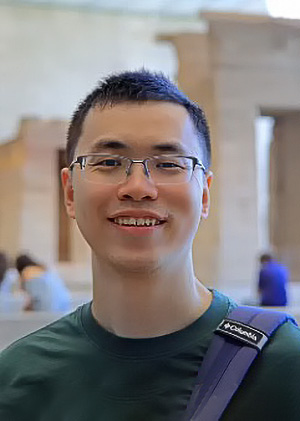
报告人:
Zhaozhou Li (李昭洲) is an associate professor at the School of Astronomy and Space Science, Nanjing University. He received his PhD from the Shanghai Astronomical Observatory in 2017, and was a postdoc at Shanghai Jiao Tong University (2018–21) and the Hebrew University of Jerusalem (2021–25), where he held a Marie Skłodowska-Curie Fellowship (2023–25). He works on galaxy formation and dynamics, with a focus on early galaxies, dark matter haloes, and the Local Group. 摘要:
JWST keeps finding galaxies that are too bright, too early. In galaxies today, feedback from massive stars keeps star formation inefficient. But in the dense, metal-poor gas of the first massive galaxies at z~10, clouds may form stars faster than supernovae can go off, producing "feedback-free" starbursts in thousands of compact star clusters. I will explain how this simple idea works, how its predictions hold up against JWST data, and what simulations tell us. I will then follow these galaxies past their peak: the clusters may help build surprisingly massive black holes, and star formation may shut down early, leaving behind the massive quiescent galaxies that JWST finds in abundance at z ~ 5. 邮编:230026 ,
 联系电话: 0551-63601861
 Email: